

Aviation ERP Technology Developments in 2025 and What to Expect in 2026
From supply chain survival to AI-driven autonomy
2025 was not a year of optional change for aviation. It was a year to adjust under pressure.
Aircraft deliveries continued to slip, parts remained hard to source, and many operators had no choice but to keep older aircraft flying longer than planned. According to the International Air Transport Association (IATA), supply chain challenges alone were expected to cost airlines more than $11 billion in 2025, driven by higher maintenance costs, leasing expenses, and inventory strain.
In this environment, aviation ERP software stopped being a back-office system and became a core operational tool. In 2025, ERPs helped aviation teams manage shortages and complexity. In 2026, they are expected to help them operate smarter and faster.
What Changed in 2025
Older Aircraft Forced Smarter Systems
With delivery backlogs now stretching years into the future, airlines had to rely on aging fleets longer than expected. IATA reports that global supply chain bottlenecks continue to limit fleet renewal, increasing pressure on maintenance operations and parts availability.
This shift made traditional maintenance planning harder to manage. Static schedules and delayed reporting no longer worked when aircraft required more frequent and unpredictable work.
Aviation ERP systems evolved to meet that reality. Maintenance planning moved toward real-time visibility. Live work orders, digital task tracking, and condition-based insights helped teams react to issues as they happened rather than after the fact.
Maintenance became an ongoing process instead of a periodic one.
Software Became a Capacity Tool
In 2025, capacity was not just about hangar space or headcount. It was about information.
With parts shortages ongoing, airlines and MROs leaned on ERP systems to reduce waste and improve decision-making. Better forecasting helped teams decide which parts were worth stocking and which risks they could manage. Visibility into repair status reduced delays caused by missing information rather than missing components.
Software did not solve supply chain problems overnight. But it reduced uncertainty, and that made operations more resilient.
Mobility Helped Address Labor Shortages
Labor shortages continued to affect aviation throughout 2025, especially in maintenance. Studies have shown a growing gap between retiring technicians and new entrants, particularly in North America and Europe
With fewer experienced technicians available, ERP systems had to become easier to use. Mobile tools replaced paper. Interfaces became simpler. Task guidance relied less on tribal knowledge and more on clear, visual workflows.
New technicians reached productivity faster because systems supported them instead of assuming years of experience.
Usability stopped being a nice extra. It directly affected output.
Regulation Accelerated Digital Adoption
Regulatory pressure also shaped aviation technology in 2025.
In Europe, EASA Part-IS introduced new requirements around information security, pushing aviation organizations to protect operational data with the same seriousness as safety data.
Manual processes and legacy systems struggled to keep up. ERP platforms became essential for managing access controls, audit trails, and data integrity without overwhelming teams.
What to Expect in 2026
From AI Assistance to AI Execution
In 2025, most AI in aviation acted as a helper. It watched data, highlighted risks, and offered suggestions, but teams still had to do the work. In 2026, we will see systems that can complete tasks on their own under clear rules and oversight, not just point out what needs to be done.
This next wave of AI, often called agentic AI, is already starting to show up in several industries, where software agents independently analyze context and act without waiting for a person to trigger every step. Research from McKinsey shows that agentic AI can reduce repetitive tasks and improve how core processes run, boosting productivity and cutting times for routine work.
Supply chain studies find that AI technologies already automate routine work like inventory tracking, order processing, and data management. These tools reduce manual steps, lower errors, and give teams faster, more accurate information.
In aviation workflows, this means ERP systems can begin to take on actions such as:
- Watching inventory levels and alerting or acting when stock is low
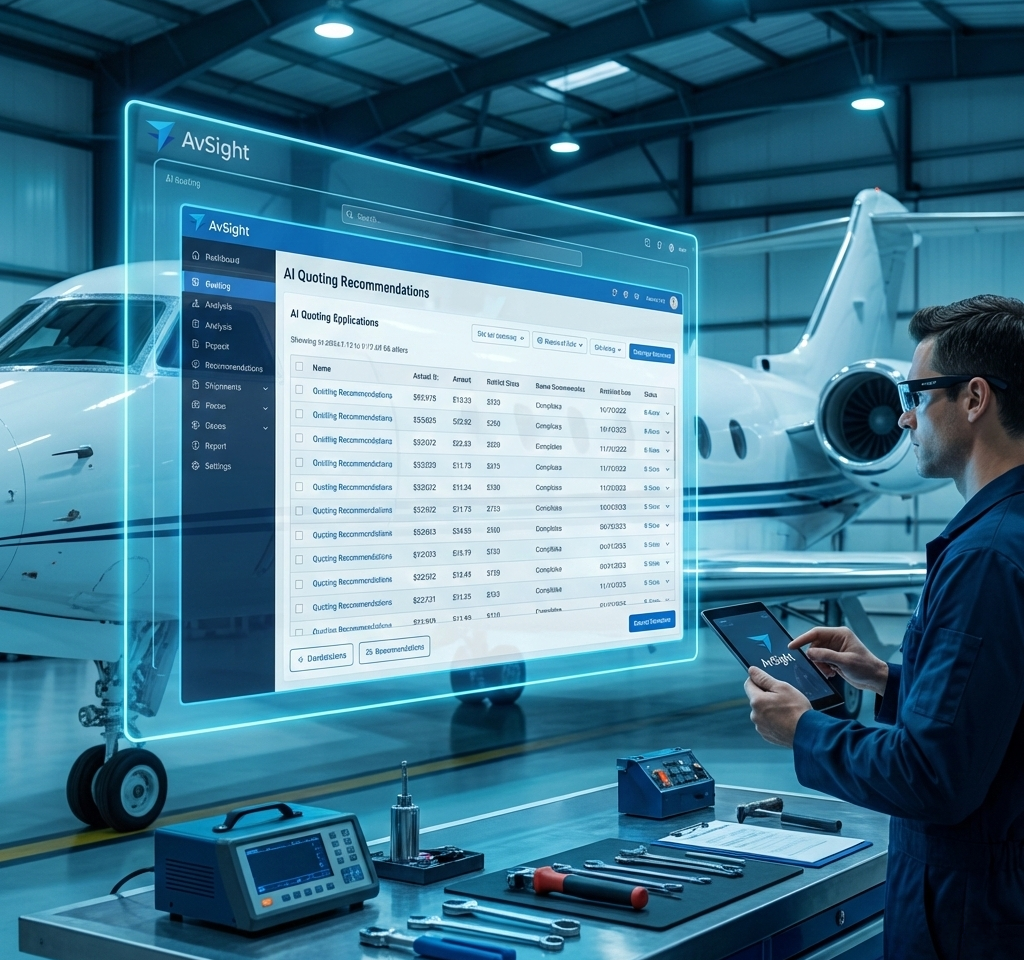
- Drafting responses to RFQs based on availability and pricing patterns
- Reconciling routine supply and finance information so teams don’t have to update spreadsheets
These capabilities do not remove people from the decision loop. Instead, they let teams stay focused on high-value decisions while the system handles repetitive work quietly in the background. That way, compliance, safety, and final approvals remain in human hands, and teams can work faster with fewer manual steps.
Sustainability Becomes Operational
Sustainability reporting is no longer optional. With ReFuelEU Aviation now active, operators must track and report sustainable aviation fuel usage accurately.
In 2026, ERP systems will increasingly handle this reporting directly. Fuel data, SAF percentages, and compliance reporting will become part of standard operational workflows rather than separate finance or sustainability projects.
Legacy Systems Reach Their Limits
Many aviation teams still depend on older software that was not built for today’s speed, data needs, or integration demands. These legacy systems often slow down operations instead of helping them move faster.
For example, Forbes highlights that older ERP setups can drag down decision-making and force teams into manual processes, even when work demands more connected, proactive systems. Legacy platforms make it harder to plan and respond quickly when conditions change.
Another analysis points out that companies often overlook the real cost of sticking with outdated software. Beyond the upfront maintenance, legacy systems can drain attention and budget because they require extra support, hardware upkeep, and specialist knowledge that becomes scarce over time. This internal overhead limits teams from adopting newer tools that offer real-time information, automation, and better scalability.
Put simply, when a system struggles to integrate data, handle real-time insights, or keep up with modern workflows, it becomes a daily drag on productivity. For aviation operations that need clear, up-to-the-minute visibility across parts, maintenance, and compliance, these limitations can slow everything from quoting to repairs.
These kinds of hidden costs and operational frictions help explain why teams are moving toward modern platforms that support better integration, stronger security, and more flexibility, without tying up resources just to keep the old system running.
Where AvSight Fits Into 2026
AvSight was built with this mind shift.
As aviation moves toward tighter regulation, smarter automation, and more connected operations, AvSight supports teams with:
- Secure, cloud-based architecture that aligns with evolving compliance needs
- Mobile workflows designed for modern maintenance teams
- Strong support for parts visibility, teardowns, and aftermarket activity
- Built-in automation that reduces manual work while keeping people in control
AvSight does not aim to replace human judgment. It helps teams focus on it.
Looking Ahead
The aviation industry did not adopt technology in 2025 for convenience. It adopted it out of necessity.
In 2026, the focus shifts from keeping up to moving forward. Teams that succeed will be the ones that reduce manual work, adapt quickly to regulation, and use technology to support better decisions across the business.
The question is no longer whether ERP technology matters. It is whether your system is ready for what comes next.
Ready to level up your business? Request a free demo of AvSight to start working smarter.
Experience AvSight for Yourself
Request a demo to see how our next generation aviation platform can give your company a competitive edge.
Request A Demo