

Automation vs Augmentation: How Aviation AI Will Transform 2026
For years, aviation AI seemed a futuristic concept. Something to explore later, once systems caught up and teams had time to experiment.
As we move into 2026, aviation AI has become a practical tool that you and your team use every day. Not to replace people, but to help them keep up with growing pressure across maintenance, sales, and operations.
The real conversation today is not whether to use AI. It is how to use it. More specifically, where automation makes sense and where augmentation still matters.
This distinction matters more in aviation than almost any other industry.
Automation vs Augmentation Explained in Plain Terms
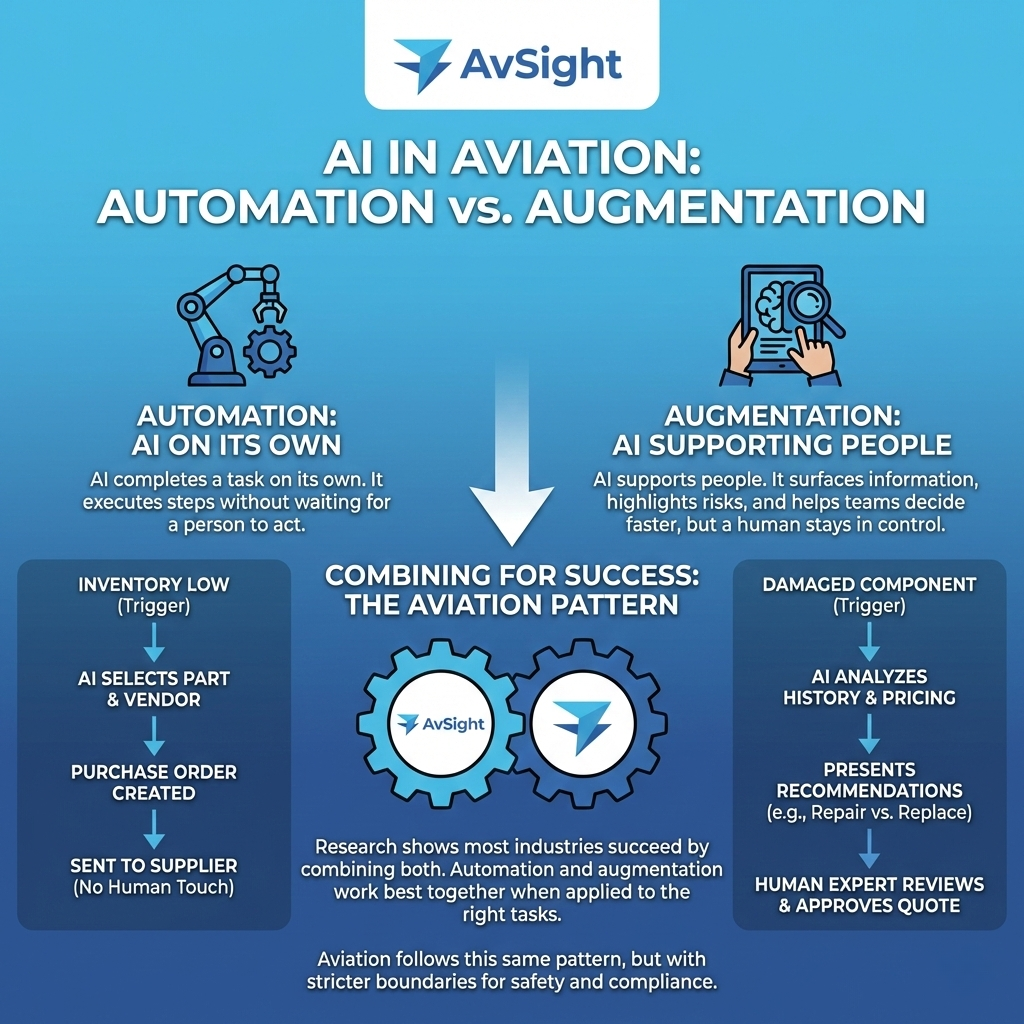
Automation means AI completes a task on its own. It executes steps without waiting for a person to act.
Augmentation means AI supports people. It surfaces information, highlights risks, and helps teams decide faster, but a human stays in control.
Research shows that most industries succeed when they combine both approaches. A recent academic study on human AI collaboration explains that automation and augmentation work best together when companies apply them to the right types of tasks rather than treating them as opposites
Aviation follows this same pattern, but with stricter boundaries.
Why Aviation Requires a Different AI Approach
Aviation does not leave safety-critical decisions to software alone. Regulators, operators, and customers expect human judgment for anything tied to airworthiness, compliance, and release to service.
That reality creates a clear line.
- AI can support maintenance planning. Licensed engineers still sign off work.
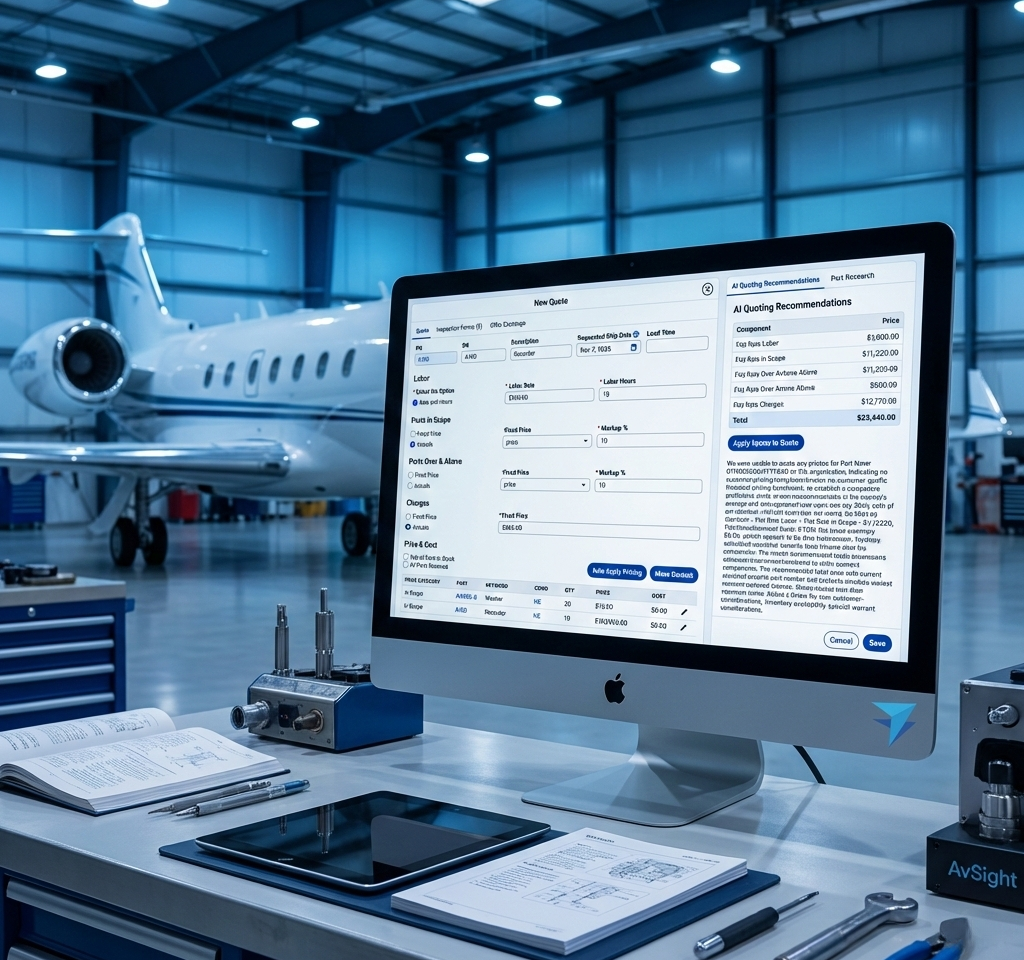
- AI can prepare quotes. Sales teams still approve pricing and commitments.
- AI can track workflows. Leaders still make final decisions.
This human-in-the-loop approach aligns with research from Berkeley’s California Management Review, which shows that organizations perform best when they automate routine work while keeping people accountable for decisions that carry risk
For aviation AI in 2026, that balance defines success.
What This Means for Aviation AI in MROs
MROs face pressure from every direction. Older aircraft stay in service longer. Labor remains tight. Compliance expectations grow each year.
This is where augmentation leads the way.
AI helps MRO teams by analyzing large volumes of maintenance data, spotting patterns, and suggesting next steps. Systems can highlight upcoming constraints, recommend timelines, or surface documentation gaps. Engineers and planners still decide what to do next.
Automation plays a role, too, but mostly behind the scenes.
AI can prepare work order data, organize paperwork, and update system records automatically. These tasks take time but carry little safety risk. When AI handles them, technicians and planners get more time to focus on real work.
Aviation Week reports that MROs already see gains from AI when they apply it to planning, documentation, and repetitive coordination tasks rather than technical sign-offs
In short, aviation AI helps MROs move faster without cutting corners.
How Sales Teams Benefit from Automation First
Sales and aftermarket operations sit on the other side of the spectrum. Here, automation delivers immediate value.
AI can read incoming RFQs, match them against inventory, reference past quotes, and prepare responses in seconds. Sales teams review, adjust if needed, and send. No manual searching. No starting from scratch.
This aligns with industry research showing that teams prefer automation for repetitive administrative work while keeping control over pricing strategy and customer relationships
In aviation sales, speed matters. AI automation helps teams respond faster while still keeping people accountable for the final answer.
Operations and Planning Sit in the Middle
Operations teams live between maintenance and sales. They juggle schedules, parts, labor, and customer expectations every day. In this case aviation AI works best as an advisor that can act when allowed.
AI can suggest start and end dates, flag risks, and recommend resource allocation. It can also automate notifications, status updates, and routine coordination across teams.
Research on future workforce design shows that workers prefer AI that reduces coordination effort rather than removes decision authority
That preference fits aviation operations well. Teams want help managing complexity, not another black box.
Why This Matters Heading Into 2026
The World Economic Forum describes this shift as the move toward a co-pilot economy, where AI supports human work instead of replacing it
Aviation already lives in that world.
In 2026, the MROs and operators that succeed will not choose automation or augmentation. They will apply both with intention.
- They will automate repetitive work.
- They will augment safety-critical decisions.
- They will keep people accountable while letting AI handle the busy work.
That is how aviation AI creates value without creating risk.
How AvSight Intelligence Fits into the Future of Aviation AI
As aviation teams balance automation and augmentation, they need tools that support both without adding complexity. That is where AvSight Intelligence fits in.
AvSight Intelligence is built directly into your AvSight ERP platform, so teams don’t have to learn a separate tool or switch screens to leverage AI. It helps with the repetitive, time-consuming work, like researching parts, generating quotes, suggesting technicians, and updating records, while your experts stay in control of decisions that matter most.
Rather than replacing people, AvSight Intelligence augments how teams work by applying AI inside familiar workflows. It follows your business rules, respects approval steps, and keeps every action traceable and transparent. By automating routine tasks and reducing manual steps, it helps MROs, sales teams, and operations focus on high-value work without sacrificing safety, consistency, or compliance.
In the world of aviation AI, this blend of automation, where it makes sense, and augmentation, where it matters most,t gives teams the confidence and capacity to work smarter, not harder.
Learn more about how AvSight Intelligence supports aviation workflows at:
https://avsight.net/avsight-intelligence/